
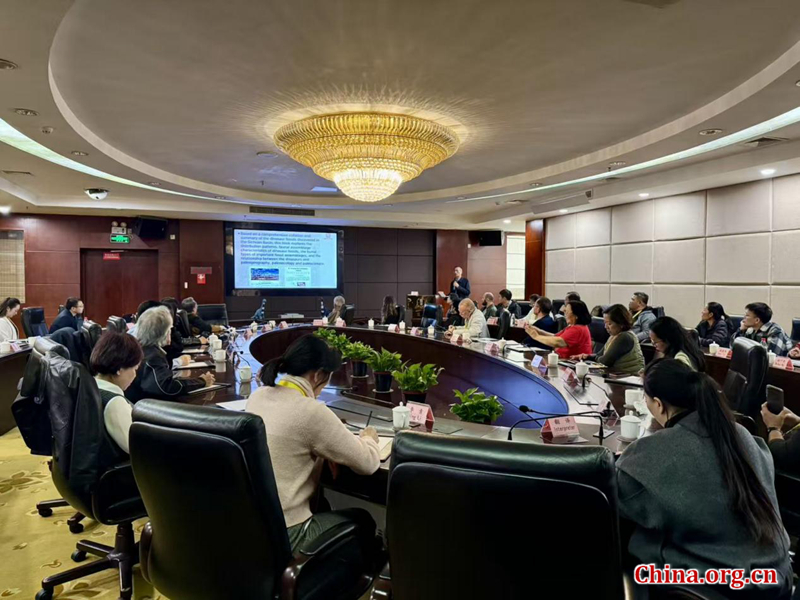
The International Academic Exchange on Paleontological Fossil Research and Conservation and Utilization was held in Zigong from Nov. 28 to 29. Experts in geology and paleontology, along with geopark administrators from more than ten countries—including Russia, U.S., Thailand and Romania—joined representatives from Chinese research institutes, museums and geoparks for an in-depth exploration of fossil protection and conservation.
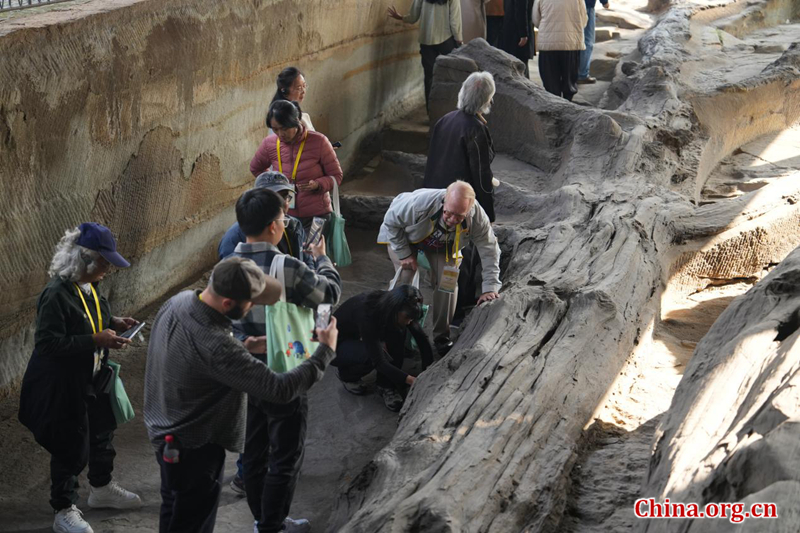
Scholars conducted field studies at several key geological and paleontological sites within the two day event. This included visits to the Da'anzhai limestone, Lianggaoshan silicified wood and the Dashanpu dinosaur fossil locality.
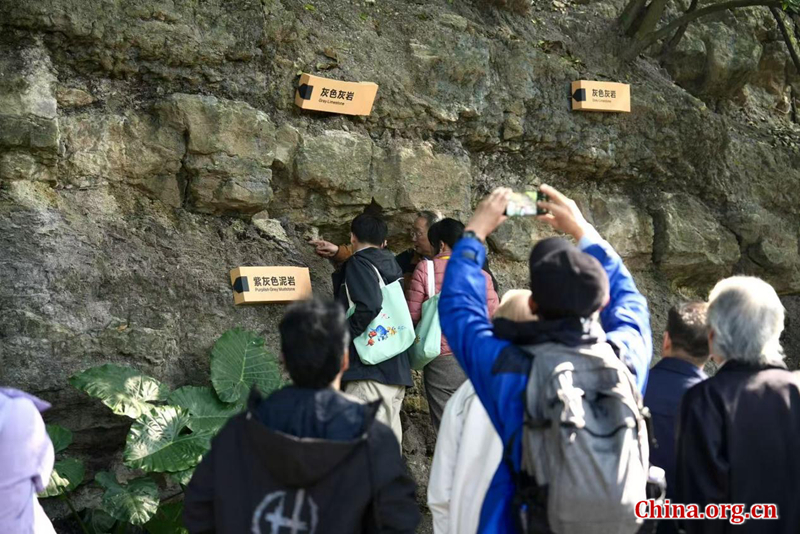
One of the highlights was the examination of the Da'anzhai limestone, which is the upper segment of the Ziliujing Formation. This holds significance in geological history. In 1933, renowned Chinese geologists Tan Xichou and Li Chunyu named the continuously exposed terrestrial strata in this area the Ziliujing Formation. This pioneering designation later became an internationally recognized reference section. Today it serves as a critical foundation for stratigraphic division and correlation within the Sichuan Basin.
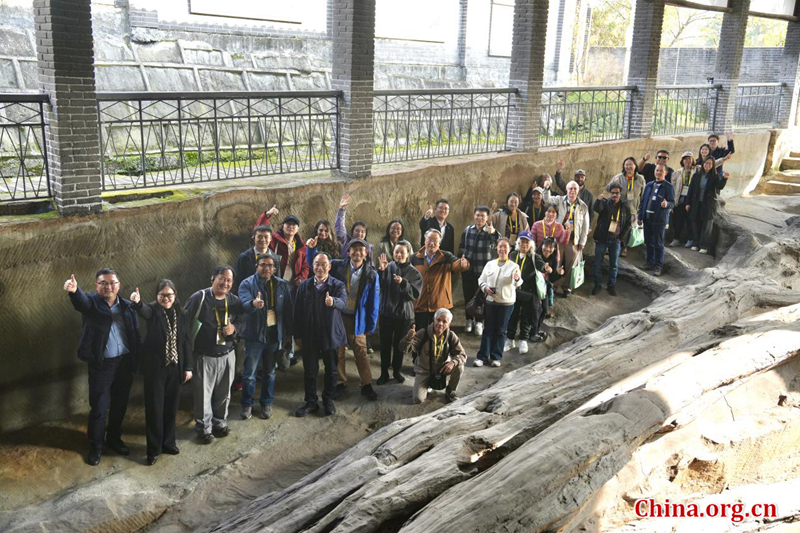
The Lianggaoshan silicified wood—another focal point of the field trip—drew particular attention. These two mid-Jurassic fossilized trees, preserved for more than 160 million years, remain remarkably intact. Their features, including well-defined growth rings, offer vivid evidence of ancient forest ecosystems and provide valuable data for reconstructing Jurassic paleoclimate conditions. It also reveals signs of vegetation evolution in the Sichuan Basin. Experts note that their association with nearby dinosaur fossils offers important clues to understanding Mesozoic terrestrial ecosystems.
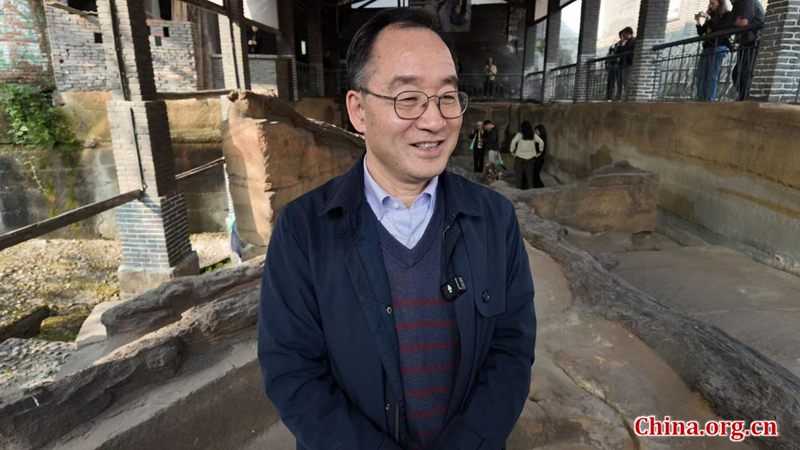
According to Wang Yongdong, Zigong has in recent years advanced a systematic approach to the study and conservation of dinosaur fossils, silicified wood and associated paleontological resources. He is a research fellow at the Nanjing Institute of Geology and Paleontology of the Chinese Academy of Sciences, vice president of the Asian Paleontological Association and council member of the International Palaeontological Association. He highlighted that the Lianggaoshan silicified wood, first featured 15 years ago as a field site during the 8th International Congress on the Jurassic System, remains in excellent condition—reflecting the local government's sustained commitment to heritage protection. Since this, the integrated development across excavation, research, exhibition and science tourism has only become better. Today, Zigong's practices of in-situ conservation, scientific research and sustainable utilization are seen as a model by the international community. Meanwhile, the Zigong Dinosaur Museum continues to serve as a world-class platform for research, exhibition and science education.
The event has injected new momentum into the protection and sustainable use of Zigong's paleontological heritage. By creating a high-level platform for international dialogue, the exchange has significantly enhanced the visibility and influence of the Zigong Model in integrating paleontology, geology and cultural tourism. It has also further promoted the conservation of geological heritage and strengthened the fusion of science, culture and tourism.


