

 Share:

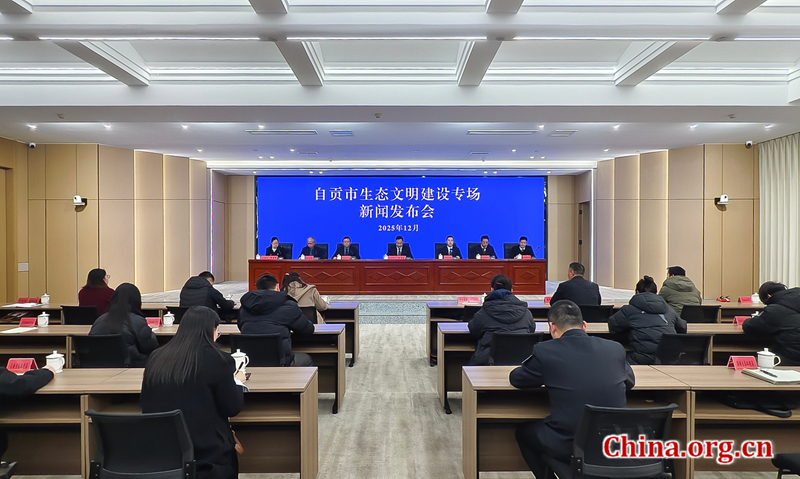
Zigong in Sichuan province has seen a historic improvement in environmental quality over the past five years, officials said Dec. 23, as the city outlined priorities for continued green development during the upcoming 15th Five-Year Plan (2026-2030).
During the 14th Five-Year Plan period (2021-2025), the city made tackling pollution a central task, coordinating efforts in carbon reduction, ecological restoration and economic growth. Zigong focused on precise, science-based and law-based pollution control, achieving its best environmental performance on record.
The city was selected as one of Sichuan province's first pilot cities for an enhanced blue sky protection campaign. Average PM2.5 concentrations fell sharply to below 40 micrograms per cubic meter in 2024 compared with 2015 levels, and dropped further to 29.8 micrograms per cubic meter from January to November 2025, ranking first in the province for improvement. Days with good or excellent air quality increased by 37 compared with a decade ago.
Water and soil management also saw major progress. Daily urban wastewater treatment capacity rose to 353,200 cubic meters, with a sewage collection and treatment rate of 97%. The share of good-quality water at 10 sections monitored by national and provincial authorities increased from less than 60% to 100%. The safe utilization rate of polluted farmland reached 95%, while key construction land achieved 100% safety. Zigong was selected as a national pilot city for the Waste-Free Cities initiative and became the first city in Sichuan to achieve zero landfill disposal of raw household waste.
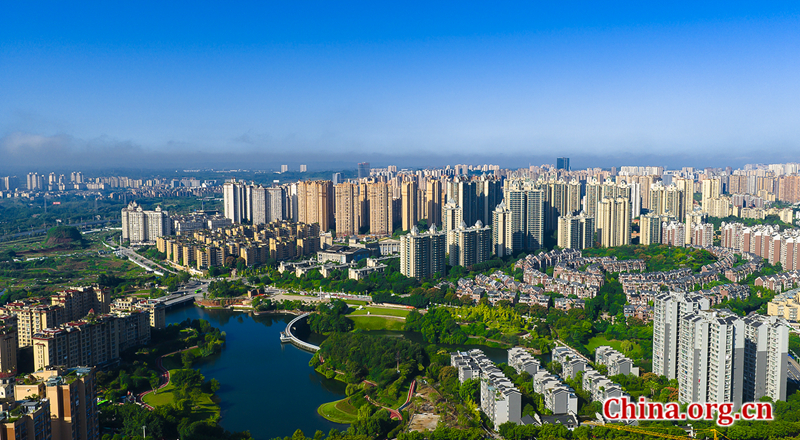
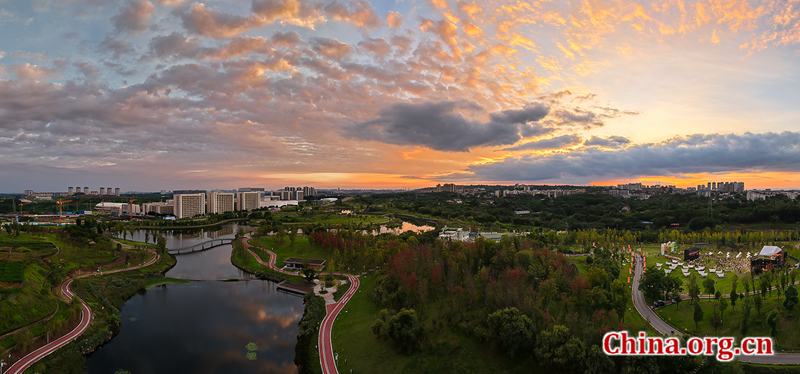
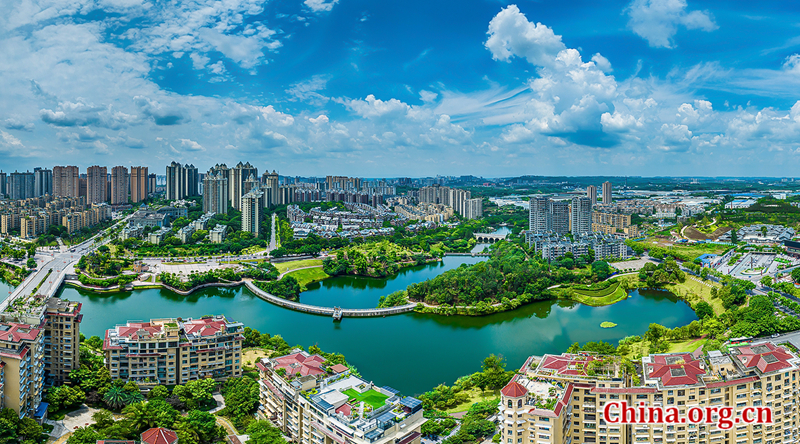
Zigong has continued to expand green spaces and integrate parks into urban development. Over the past five years, the city completed ecological restoration along 338 kilometers of rivers and planted approximately 52,267 hectares of forest. Green coverage in built-up urban areas reached 39.37%, with per capita park green space increasing to 18.5 square meters.
Improved ecological monitoring has shown results, with the Chinese merganser, a protected duck species, spotted in the area for five consecutive years. Other rare species, such as freshwater jellyfish and cranes, have also been frequently sighted. Fushun county was named a pilot county for the Beautiful Sichuan initiative.
Through strict energy consumption controls and industrial restructuring, Zigong had reduced energy intensity per unit of GDP by a cumulative 16.2% by 2024, meeting its 14th Five-Year Plan target ahead of schedule. New energy buses now account for over 90% of the city's public transport fleet, while green travel exceeds 75% of all trips. The city was recognized as China's first Green Fluorine Capital, established 22 national and provincial-level green manufacturing demonstration projects, and saw its high-tech zone become Sichuan's only national-level water efficiency frontrunner industrial park.
In advancing green industrial transformation, Zigong has combined policy support, financial incentives and technological innovation to accelerate the growth of green and low-carbon industries, achieving notable reductions in industrial pollution.
To address historical environmental issues, the city sealed and backfilled 52 high-risk abandoned salt brine wells and formulated local governance standards, providing a model for similar challenges across the province.
Looking ahead to the 15th Five-Year Plan period, Zigong will focus on continuously improving environmental quality, seeking breakthroughs in air, water and soil management, ecological protection and restoration, and the transition toward greener, low-carbon development, officials said.

Zigong in Sichuan province has seen a historic improvement in environmental quality over the past five years, officials said Dec. 23, as the city outlined priorities for continued green development during the upcoming 15th Five-Year Plan (2026-2030).
During the 14th Five-Year Plan period (2021-2025), the city made tackling pollution a central task, coordinating efforts in carbon reduction, ecological restoration and economic growth. Zigong focused on precise, science-based and law-based pollution control, achieving its best environmental performance on record.
The city was selected as one of Sichuan province's first pilot cities for an enhanced blue sky protection campaign. Average PM2.5 concentrations fell sharply to below 40 micrograms per cubic meter in 2024 compared with 2015 levels, and dropped further to 29.8 micrograms per cubic meter from January to November 2025, ranking first in the province for improvement. Days with good or excellent air quality increased by 37 compared with a decade ago.
Water and soil management also saw major progress. Daily urban wastewater treatment capacity rose to 353,200 cubic meters, with a sewage collection and treatment rate of 97%. The share of good-quality water at 10 sections monitored by national and provincial authorities increased from less than 60% to 100%. The safe utilization rate of polluted farmland reached 95%, while key construction land achieved 100% safety. Zigong was selected as a national pilot city for the Waste-Free Cities initiative and became the first city in Sichuan to achieve zero landfill disposal of raw household waste.
Zigong has continued to expand green spaces and integrate parks into urban development. Over the past five years, the city completed ecological restoration along 338 kilometers of rivers and planted approximately 52,267 hectares of forest. Green coverage in built-up urban areas reached 39.37%, with per capita park green space increasing to 18.5 square meters.
Improved ecological monitoring has shown results, with the Chinese merganser, a protected duck species, spotted in the area for five consecutive years. Other rare species, such as freshwater jellyfish and cranes, have also been frequently sighted. Fushun county was named a pilot county for the Beautiful Sichuan initiative.
Through strict energy consumption controls and industrial restructuring, Zigong had reduced energy intensity per unit of GDP by a cumulative 16.2% by 2024, meeting its 14th Five-Year Plan target ahead of schedule. New energy buses now account for over 90% of the city's public transport fleet, while green travel exceeds 75% of all trips. The city was recognized as China's first Green Fluorine Capital, established 22 national and provincial-level green manufacturing demonstration projects, and saw its high-tech zone become Sichuan's only national-level water efficiency frontrunner industrial park.
In advancing green industrial transformation, Zigong has combined policy support, financial incentives and technological innovation to accelerate the growth of green and low-carbon industries, achieving notable reductions in industrial pollution.
To address historical environmental issues, the city sealed and backfilled 52 high-risk abandoned salt brine wells and formulated local governance standards, providing a model for similar challenges across the province.
Looking ahead to the 15th Five-Year Plan period, Zigong will focus on continuously improving environmental quality, seeking breakthroughs in air, water and soil management, ecological protection and restoration, and the transition toward greener, low-carbon development, officials said.
Zigong in Sichuan province has seen a historic improvement in environmental quality over the past five years, officials said Dec. 23, as the city outlined priorities for continued green development during the upcoming 15th Five-Year Plan (2026-2030).
During the 14th Five-Year Plan period (2021-2025), the city made tackling pollution a central task, coordinating efforts in carbon reduction, ecological restoration and economic growth. Zigong focused on precise, science-based and law-based pollution control, achieving its best environmental performance on record.
The city was selected as one of Sichuan province's first pilot cities for an enhanced blue sky protection campaign. Average PM2.5 concentrations fell sharply to below 40 micrograms per cubic meter in 2024 compared with 2015 levels, and dropped further to 29.8 micrograms per cubic meter from January to November 2025, ranking first in the province for improvement. Days with good or excellent air quality increased by 37 compared with a decade ago.
Water and soil management also saw major progress. Daily urban wastewater treatment capacity rose to 353,200 cubic meters, with a sewage collection and treatment rate of 97%. The share of good-quality water at 10 sections monitored by national and provincial authorities increased from less than 60% to 100%. The safe utilization rate of polluted farmland reached 95%, while key construction land achieved 100% safety. Zigong was selected as a national pilot city for the Waste-Free Cities initiative and became the first city in Sichuan to achieve zero landfill disposal of raw household waste.
Zigong has continued to expand green spaces and integrate parks into urban development. Over the past five years, the city completed ecological restoration along 338 kilometers of rivers and planted approximately 52,267 hectares of forest. Green coverage in built-up urban areas reached 39.37%, with per capita park green space increasing to 18.5 square meters.
Improved ecological monitoring has shown results, with the Chinese merganser, a protected duck species, spotted in the area for five consecutive years. Other rare species, such as freshwater jellyfish and cranes, have also been frequently sighted. Fushun county was named a pilot county for the Beautiful Sichuan initiative.
Through strict energy consumption controls and industrial restructuring, Zigong had reduced energy intensity per unit of GDP by a cumulative 16.2% by 2024, meeting its 14th Five-Year Plan target ahead of schedule. New energy buses now account for over 90% of the city's public transport fleet, while green travel exceeds 75% of all trips. The city was recognized as China's first Green Fluorine Capital, established 22 national and provincial-level green manufacturing demonstration projects, and saw its high-tech zone become Sichuan's only national-level water efficiency frontrunner industrial park.
In advancing green industrial transformation, Zigong has combined policy support, financial incentives and technological innovation to accelerate the growth of green and low-carbon industries, achieving notable reductions in industrial pollution.
To address historical environmental issues, the city sealed and backfilled 52 high-risk abandoned salt brine wells and formulated local governance standards, providing a model for similar challenges across the province.
Looking ahead to the 15th Five-Year Plan period, Zigong will focus on continuously improving environmental quality, seeking breakthroughs in air, water and soil management, ecological protection and restoration, and the transition toward greener, low-carbon development, officials said.

Zigong in Sichuan province has seen a historic improvement in environmental quality over the past five years, officials said Dec. 23, as the city outlined priorities for continued green development during the upcoming 15th Five-Year Plan (2026-2030).
During the 14th Five-Year Plan period (2021-2025), the city made tackling pollution a central task, coordinating efforts in carbon reduction, ecological restoration and economic growth. Zigong focused on precise, science-based and law-based pollution control, achieving its best environmental performance on record.
The city was selected as one of Sichuan province's first pilot cities for an enhanced blue sky protection campaign. Average PM2.5 concentrations fell sharply to below 40 micrograms per cubic meter in 2024 compared with 2015 levels, and dropped further to 29.8 micrograms per cubic meter from January to November 2025, ranking first in the province for improvement. Days with good or excellent air quality increased by 37 compared with a decade ago.
Water and soil management also saw major progress. Daily urban wastewater treatment capacity rose to 353,200 cubic meters, with a sewage collection and treatment rate of 97%. The share of good-quality water at 10 sections monitored by national and provincial authorities increased from less than 60% to 100%. The safe utilization rate of polluted farmland reached 95%, while key construction land achieved 100% safety. Zigong was selected as a national pilot city for the Waste-Free Cities initiative and became the first city in Sichuan to achieve zero landfill disposal of raw household waste.
Zigong has continued to expand green spaces and integrate parks into urban development. Over the past five years, the city completed ecological restoration along 338 kilometers of rivers and planted approximately 52,267 hectares of forest. Green coverage in built-up urban areas reached 39.37%, with per capita park green space increasing to 18.5 square meters.
Improved ecological monitoring has shown results, with the Chinese merganser, a protected duck species, spotted in the area for five consecutive years. Other rare species, such as freshwater jellyfish and cranes, have also been frequently sighted. Fushun county was named a pilot county for the Beautiful Sichuan initiative.
Through strict energy consumption controls and industrial restructuring, Zigong had reduced energy intensity per unit of GDP by a cumulative 16.2% by 2024, meeting its 14th Five-Year Plan target ahead of schedule. New energy buses now account for over 90% of the city's public transport fleet, while green travel exceeds 75% of all trips. The city was recognized as China's first Green Fluorine Capital, established 22 national and provincial-level green manufacturing demonstration projects, and saw its high-tech zone become Sichuan's only national-level water efficiency frontrunner industrial park.
In advancing green industrial transformation, Zigong has combined policy support, financial incentives and technological innovation to accelerate the growth of green and low-carbon industries, achieving notable reductions in industrial pollution.
To address historical environmental issues, the city sealed and backfilled 52 high-risk abandoned salt brine wells and formulated local governance standards, providing a model for similar challenges across the province.
Looking ahead to the 15th Five-Year Plan period, Zigong will focus on continuously improving environmental quality, seeking breakthroughs in air, water and soil management, ecological protection and restoration, and the transition toward greener, low-carbon development, officials said.
Zigong in Sichuan province has seen a historic improvement in environmental quality over the past five years, officials said Dec. 23, as the city outlined priorities for continued green development during the upcoming 15th Five-Year Plan (2026-2030).
During the 14th Five-Year Plan period (2021-2025), the city made tackling pollution a central task, coordinating efforts in carbon reduction, ecological restoration and economic growth. Zigong focused on precise, science-based and law-based pollution control, achieving its best environmental performance on record.
The city was selected as one of Sichuan province's first pilot cities for an enhanced blue sky protection campaign. Average PM2.5 concentrations fell sharply to below 40 micrograms per cubic meter in 2024 compared with 2015 levels, and dropped further to 29.8 micrograms per cubic meter from January to November 2025, ranking first in the province for improvement. Days with good or excellent air quality increased by 37 compared with a decade ago.
Water and soil management also saw major progress. Daily urban wastewater treatment capacity rose to 353,200 cubic meters, with a sewage collection and treatment rate of 97%. The share of good-quality water at 10 sections monitored by national and provincial authorities increased from less than 60% to 100%. The safe utilization rate of polluted farmland reached 95%, while key construction land achieved 100% safety. Zigong was selected as a national pilot city for the Waste-Free Cities initiative and became the first city in Sichuan to achieve zero landfill disposal of raw household waste.
Zigong has continued to expand green spaces and integrate parks into urban development. Over the past five years, the city completed ecological restoration along 338 kilometers of rivers and planted approximately 52,267 hectares of forest. Green coverage in built-up urban areas reached 39.37%, with per capita park green space increasing to 18.5 square meters.
Improved ecological monitoring has shown results, with the Chinese merganser, a protected duck species, spotted in the area for five consecutive years. Other rare species, such as freshwater jellyfish and cranes, have also been frequently sighted. Fushun county was named a pilot county for the Beautiful Sichuan initiative.
Through strict energy consumption controls and industrial restructuring, Zigong had reduced energy intensity per unit of GDP by a cumulative 16.2% by 2024, meeting its 14th Five-Year Plan target ahead of schedule. New energy buses now account for over 90% of the city's public transport fleet, while green travel exceeds 75% of all trips. The city was recognized as China's first Green Fluorine Capital, established 22 national and provincial-level green manufacturing demonstration projects, and saw its high-tech zone become Sichuan's only national-level water efficiency frontrunner industrial park.
In advancing green industrial transformation, Zigong has combined policy support, financial incentives and technological innovation to accelerate the growth of green and low-carbon industries, achieving notable reductions in industrial pollution.
To address historical environmental issues, the city sealed and backfilled 52 high-risk abandoned salt brine wells and formulated local governance standards, providing a model for similar challenges across the province.
Looking ahead to the 15th Five-Year Plan period, Zigong will focus on continuously improving environmental quality, seeking breakthroughs in air, water and soil management, ecological protection and restoration, and the transition toward greener, low-carbon development, officials said.

Zigong in Sichuan province has seen a historic improvement in environmental quality over the past five years, officials said Dec. 23, as the city outlined priorities for continued green development during the upcoming 15th Five-Year Plan (2026-2030).
During the 14th Five-Year Plan period (2021-2025), the city made tackling pollution a central task, coordinating efforts in carbon reduction, ecological restoration and economic growth. Zigong focused on precise, science-based and law-based pollution control, achieving its best environmental performance on record.
The city was selected as one of Sichuan province's first pilot cities for an enhanced blue sky protection campaign. Average PM2.5 concentrations fell sharply to below 40 micrograms per cubic meter in 2024 compared with 2015 levels, and dropped further to 29.8 micrograms per cubic meter from January to November 2025, ranking first in the province for improvement. Days with good or excellent air quality increased by 37 compared with a decade ago.
Water and soil management also saw major progress. Daily urban wastewater treatment capacity rose to 353,200 cubic meters, with a sewage collection and treatment rate of 97%. The share of good-quality water at 10 sections monitored by national and provincial authorities increased from less than 60% to 100%. The safe utilization rate of polluted farmland reached 95%, while key construction land achieved 100% safety. Zigong was selected as a national pilot city for the Waste-Free Cities initiative and became the first city in Sichuan to achieve zero landfill disposal of raw household waste.
Zigong has continued to expand green spaces and integrate parks into urban development. Over the past five years, the city completed ecological restoration along 338 kilometers of rivers and planted approximately 52,267 hectares of forest. Green coverage in built-up urban areas reached 39.37%, with per capita park green space increasing to 18.5 square meters.
Improved ecological monitoring has shown results, with the Chinese merganser, a protected duck species, spotted in the area for five consecutive years. Other rare species, such as freshwater jellyfish and cranes, have also been frequently sighted. Fushun county was named a pilot county for the Beautiful Sichuan initiative.
Through strict energy consumption controls and industrial restructuring, Zigong had reduced energy intensity per unit of GDP by a cumulative 16.2% by 2024, meeting its 14th Five-Year Plan target ahead of schedule. New energy buses now account for over 90% of the city's public transport fleet, while green travel exceeds 75% of all trips. The city was recognized as China's first Green Fluorine Capital, established 22 national and provincial-level green manufacturing demonstration projects, and saw its high-tech zone become Sichuan's only national-level water efficiency frontrunner industrial park.
In advancing green industrial transformation, Zigong has combined policy support, financial incentives and technological innovation to accelerate the growth of green and low-carbon industries, achieving notable reductions in industrial pollution.
To address historical environmental issues, the city sealed and backfilled 52 high-risk abandoned salt brine wells and formulated local governance standards, providing a model for similar challenges across the province.
Looking ahead to the 15th Five-Year Plan period, Zigong will focus on continuously improving environmental quality, seeking breakthroughs in air, water and soil management, ecological protection and restoration, and the transition toward greener, low-carbon development, officials said.
Zigong in Sichuan province has seen a historic improvement in environmental quality over the past five years, officials said Dec. 23, as the city outlined priorities for continued green development during the upcoming 15th Five-Year Plan (2026-2030).
During the 14th Five-Year Plan period (2021-2025), the city made tackling pollution a central task, coordinating efforts in carbon reduction, ecological restoration and economic growth. Zigong focused on precise, science-based and law-based pollution control, achieving its best environmental performance on record.
The city was selected as one of Sichuan province's first pilot cities for an enhanced blue sky protection campaign. Average PM2.5 concentrations fell sharply to below 40 micrograms per cubic meter in 2024 compared with 2015 levels, and dropped further to 29.8 micrograms per cubic meter from January to November 2025, ranking first in the province for improvement. Days with good or excellent air quality increased by 37 compared with a decade ago.
Water and soil management also saw major progress. Daily urban wastewater treatment capacity rose to 353,200 cubic meters, with a sewage collection and treatment rate of 97%. The share of good-quality water at 10 sections monitored by national and provincial authorities increased from less than 60% to 100%. The safe utilization rate of polluted farmland reached 95%, while key construction land achieved 100% safety. Zigong was selected as a national pilot city for the Waste-Free Cities initiative and became the first city in Sichuan to achieve zero landfill disposal of raw household waste.
Zigong has continued to expand green spaces and integrate parks into urban development. Over the past five years, the city completed ecological restoration along 338 kilometers of rivers and planted approximately 52,267 hectares of forest. Green coverage in built-up urban areas reached 39.37%, with per capita park green space increasing to 18.5 square meters.
Improved ecological monitoring has shown results, with the Chinese merganser, a protected duck species, spotted in the area for five consecutive years. Other rare species, such as freshwater jellyfish and cranes, have also been frequently sighted. Fushun county was named a pilot county for the Beautiful Sichuan initiative.
Through strict energy consumption controls and industrial restructuring, Zigong had reduced energy intensity per unit of GDP by a cumulative 16.2% by 2024, meeting its 14th Five-Year Plan target ahead of schedule. New energy buses now account for over 90% of the city's public transport fleet, while green travel exceeds 75% of all trips. The city was recognized as China's first Green Fluorine Capital, established 22 national and provincial-level green manufacturing demonstration projects, and saw its high-tech zone become Sichuan's only national-level water efficiency frontrunner industrial park.
In advancing green industrial transformation, Zigong has combined policy support, financial incentives and technological innovation to accelerate the growth of green and low-carbon industries, achieving notable reductions in industrial pollution.
To address historical environmental issues, the city sealed and backfilled 52 high-risk abandoned salt brine wells and formulated local governance standards, providing a model for similar challenges across the province.
Looking ahead to the 15th Five-Year Plan period, Zigong will focus on continuously improving environmental quality, seeking breakthroughs in air, water and soil management, ecological protection and restoration, and the transition toward greener, low-carbon development, officials said.


 京公网安备 11010802027341号
9748f2a0-516d-457a-9051-bc927e478e24.jpg)