

 Share:

The 37th Galaxy Awards ceremony and a series of activities marking the 20th anniversary of the publication of "The Three-Body Problem" opened in Zigong, Sichuan province, on Sept. 11, marking the first time the Chinese science fiction awards have been presented in the city since their establishment in 1985.
Attended by prominent figures including writer A Lai, science fiction author Liu Cixin, literary critic Shi Zhanjun and film producer Wang Hongwei, the winners of this year's Galaxy Awards were announced at the ceremony.
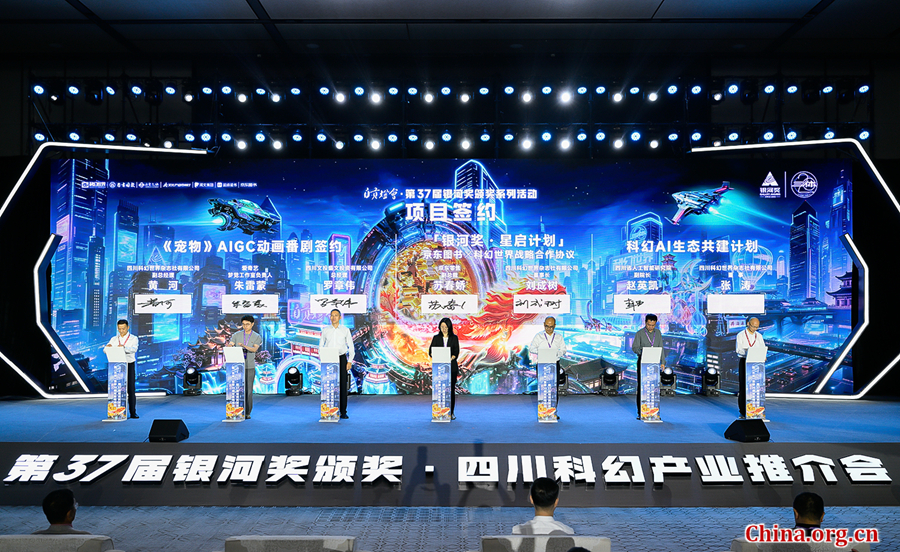
Meanwhile, a number of science fiction projects spanning literature, publishing, film and television, games, culture and tourism, and artificial intelligence were unveiled, with multiple cooperation agreements signed.
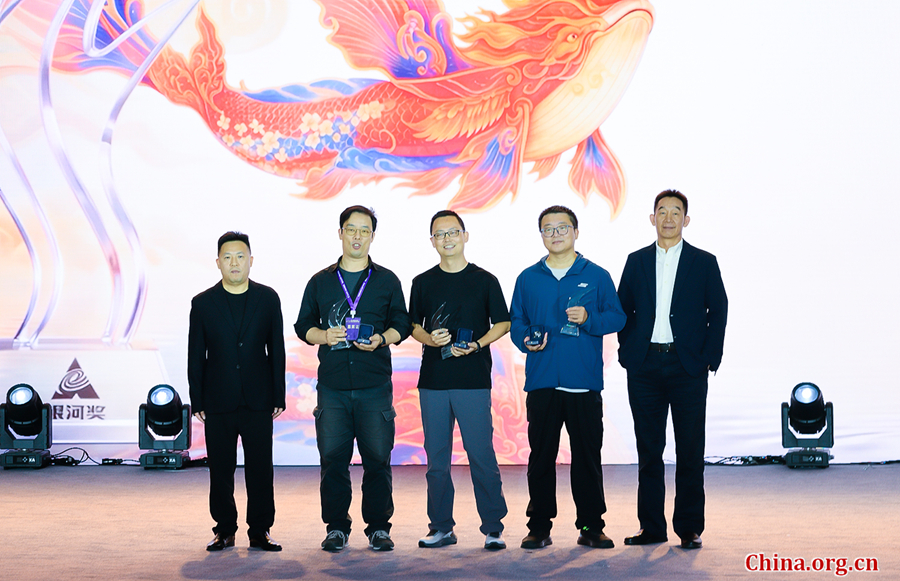
Following evaluation by the judging panel, the award for Best Novel was left vacant this year. Yang Wanqing, Wang Yanzhong and Hui Hu won the Best Novella Award. A series of other winners were also announced, including those for Best Short Story, Best New Writer, Best Artwork and Best Translation. This year's Galaxy Awards continued to recognize achievements in sci-fi literature while expanding their focus to areas including translation, children's science fiction, online literature and overseas communication. The 2026 Science Fiction IP Value Ranking was also released during the event.
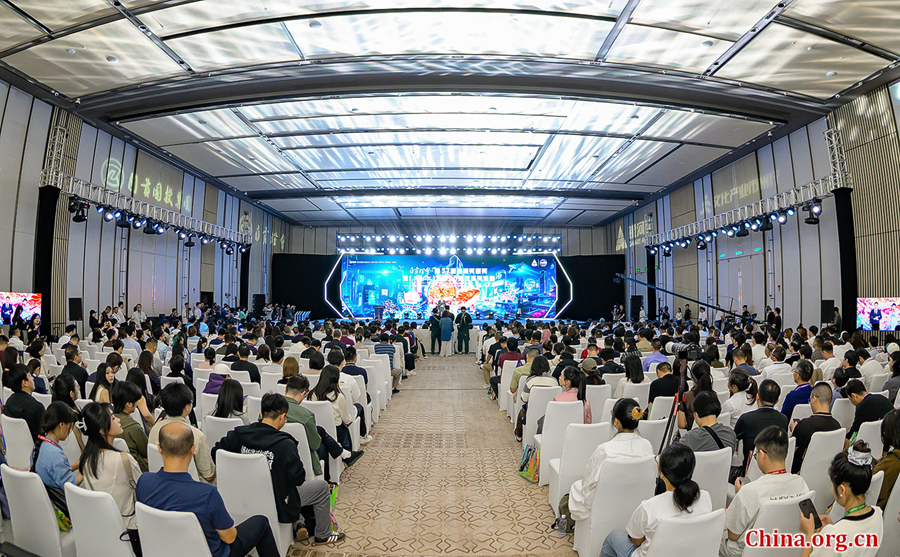
At a science fiction industry promotion event held the same day, a range of projects from Sichuan were presented, highlighting efforts to expand science fiction from literary works into a broader creative industry.
In Zigong, a city known for its long-standing lantern-making tradition, science fiction is being combined with this distinctive cultural resource to create a new sci-fi lantern project for the 2027 Galaxy Science Fiction Convention. In publishing, a youth edition of "The Three-Body Problem" is expected to bring the acclaimed work closer to younger readers. Film and television projects are exploring new ways to adapt science fiction literature for the screen, while the development of AI-generated content is opening new possibilities for the use of AI in science fiction content creation.
In 2006, "The Three-Body Problem" began serialization in the magazine Science Fiction World. Twenty years later, the novel has grown from a sci-fi work into an important cultural symbol of Chinese science fiction's growing global reach.
The story has so far expanded into publishing, film, television, animation and games, while translations and overseas editions have connected it with people all around the world. The novel has helped introduce more Chinese readers to the possibilities of science fiction while bringing the imagination of Chinese sci-fi writers about the future, technology and humanity to a global audience.


 京公网安备 11010802027341号
bff163c2-10ec-4935-9889-ccf21fda25a6.jpg)